Opretions
Today LIC functions with 2048 fully computerized branch offices, 8 zonal offices, around 113 divisional offices, 2,048 branches and 1408 satellite offices and the Central Office;[9] it also has 73[10] customer zones and 25 metro-area service hubs located in different cities and towns of India. It also has a network of 1,537,064 individual agents, 342 Corporate Agents, 109 Referral Agents, 114 Brokers and 42 Banks for soliciting life insurance business from the public.
The LIC has 22 departments each headed by an Executive Director namely Marketing, Bankassurance (B&AC), Corporate Communication, Personnel, CRM, Direct Marketing, E&OS, F&A, IT/BPR, Inspection, Investment, SBU/Estates, Investment Operations, P&GS, Actuarial, Chairman Sectt, F&A, Micro Insurance, RTI, HRD, Engineering, and Vigilance. [11]
The LIC has 8 Zonal Offices headed by a Zonal Manager(I/C) (Executive Director Cadre) who is one of the key decision-makers of the corporation after the Board
North Zone New Delhi
Central Zone Bhopal
East Zone Kolkata
West Zone Mumbai
South Zone Chennai
East Central Zone Patna
North Central Zone Kanpur
South Central Zone Hyderabad
The LIC follows a horizontal line of command & vertical line of command, while each department is headed by an Executive Director, the Zonal offices are headed by a Zonal Manager who oversees all the departments & divisions of the Zone – Making him De-facto CEO of the Zone. The zonal departmental heads are Regional Managers. Divisions are headed by Sr. Divisional Manager(I/C) who oversees all the departments & branches of the division. There are 3 layers of Horizontal Management namely Senior Divisional Manager(I/C), Zonal Manager(I/C) & the Chairman/MD. There are also 3 layers of vertical management namely Managers of Divisions, Regional Managers of Zonal Office & the Executive Directors of Central office. Horizontal Management is considered key managers of the corporation.
The Cadre list & Possible designations of Class 1 officers (Increasing order)
Cadre/Rank Name Posting Designations
Chairman Chairman
Managing Director Managing Director
Zonal Manager(Special) Zonal Manager(I/C), Executive Director, CEO of Subsidiary
Zonal Manager(Ordinary)(3 Year Cadre) Regional Manager, Chief, Director, CEO of Subsidiary
Sr Divisional Manager Deputy Zonal Manager, SDM(I/C), Principal, Faculty Member, Regional Manager, Secretary
Divisional Manager Chief Manager, DM, Secretary, Dy Secretary, Marketing Manager, Principal, Faculty Member
Assistant Divisional Manager Sr. Branch Manager (I/C), Sr. Branch Manager(Sales), Manager(Admin), Manager, Dy Secretary, Faculty Member
Administrative Officer Branch Manager(I/C), BM(SALES), AO
Assistant Administrative Officer ABM(Sales), AAO, PA, Deputy Manager,
Now LIC also has the 1899 branches of IDBI bank at its disposal thus it can carry out its insurance business through these branches of the bank.
Location
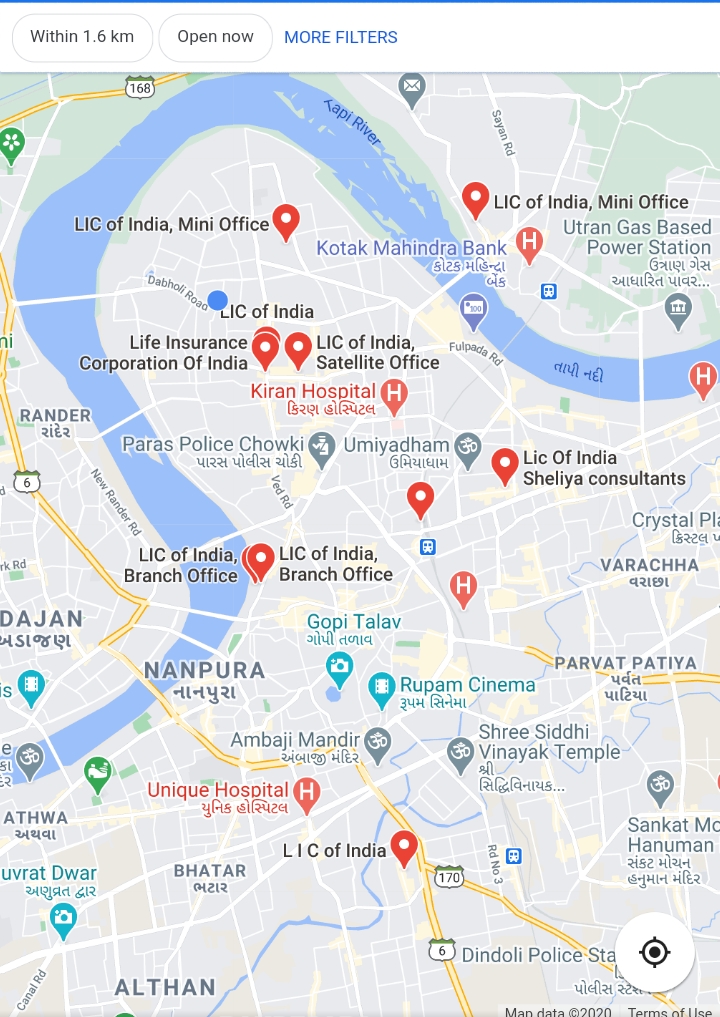
1.4 km · Shyam Complex, 1st floor, 213, Vihar Society No.2 Valinath Chowk, Katargam, Singanpur Rd, Katargam
Open now
LIC of India, Satellite Office
1.4 km · Shyam Complex, 1st floor, 213, Vihar Society No.2 Valinath Chowk, Katargam, Singanpur Rd, Katargam
Open now
LIC history

Founding organisations Edit
The Oriental Life Insurance Company, the first company in India offering life insurance coverage, was established in Kolkata in 1818. Its primary target market was the Europeans based in India, and it charged Indians heftier premiums.[3] Surendranath Tagore had founded Hindustan Insurance Society, which later became Life Insurance Corporation.[4]
The Bombay Mutual Life Assurance Society, formed in 1870, was the first native insurance provider. Other insurance companies established in the pre-independence era included
Postal Life Insurance (PLI) was introduced on 1 February 1884
Bharat Insurance Company (1896)
United India (1906)
National Indian (1906)
National Insurance (1906)
Co-operative Assurance (1906)
Hindustan Co-operatives (1907)
Indian Mercantile
General Assurance
Swadeshi Life (later Bombay Life)
Sahyadri Insurance (Merged into LIC, 1986)
The first 150 years were marked mostly by turbulent economic conditions. It witnessed India’s First War of Independence, adverse effects of the World War I and World War II on the economy of India, and in between them the period of worldwide economic crises triggered by the Great depression. The first half of the 20th century saw a heightened struggle for India’s independence. The aggregate effect of these events led to a high rate of and liquidation of life insurance companies in India. This had adversely affected the faith of the general in the utility of obtaining life cover.
 LIC
LIC 